
Run a Dance Studio Game mechanics explained
The systems underneath the loop: currencies, stats, progression gates, and how everything connects.
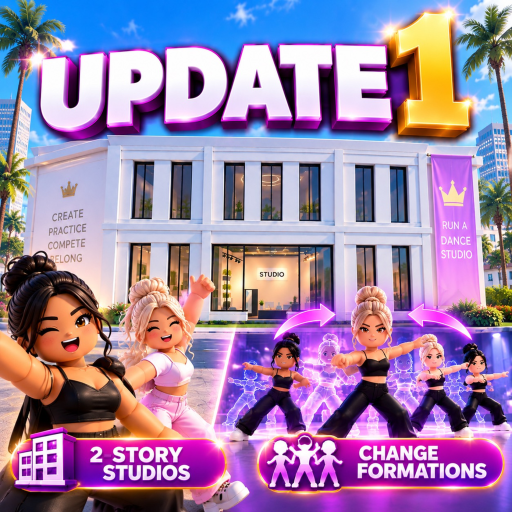
Run a Dance Studio has five verbs the studio posted at launch: build, enrol, train, compete, open packs. Behind those verbs are two currencies, a stat system, a progression gate, and a weekly judged event. This page is the layer underneath the how-to guides — what actually drives the loop when you stop reading tutorials and start asking why the numbers move.
Two currencies
Cash pays for the building and teachers. It flows from enrolment and competitions. It is the wage.
Gems buy packs that contain dancers, songs, costumes, and teachers. They flow from competitions, the Quest tab, and Awards. They are the pack currency.
These two do not swap. Cash does not buy packs. Gems do not hire teachers. Keeping them separate is the first discipline in the game. Mixing them up — opening packs while the floor is empty, or saving Cash instead of enrolling because you want Gems — stalls both.
Stats and training
Dancers have stats raised by placing them with teachers. Higher stats mean higher scores in competitions. Stats are not visible as a published number — they are experienced through ELO movement on the leaderboard. When your ELO climbs after a week of teacher hours, that is the stat system working.
Training is the third verb on the studio’s own loop, sitting between enrolment and competition. Skipping it produces a pretty lobby with flat scores. The official launch-week graphic put teachers third for a reason.
The progression gate
The studio has not published a level cap or a prestige system. Progression is gated by:
- Rooms — more rooms means more enrolled dancers means more Cash
- Staff slots — teachers need somewhere to stand before they can train
- Saved routines — Routine Creator Gamepass raises the cap from the base number to ten
- Qualification — 1 Solo Nationals plus 1 Group Nationals before Awards entry
Each gate is something you earn through the loop, not something you buy with Robux except the optional Routine Creator pass.
The weekly judged event
Roblox Awards is the weekly show. It uses cross-server scoring — everyone enters the same competition regardless of which 10-player server they are in. The 24-entrant lobby cap and the Champion title make it the product highlight.
The rest of the week is regular Nationals and regular competitions. Both pay Cash and Gems. Neither has the prestige of the Champion title, but regular comps are where you farm the resources to compete at Awards level.
How systems connect
Rooms → Enrolment → Cash → Teachers → Stats → Competitions → Cash + Gems → Packs → Dancers + Songs + Costumes + Teachers → Back to rooms
That loop is the game. Every guide in this wiki is a specific point on that chain. See the guides hub for the full list of pages.
What is not in the systems
The studio has not published:
- A confirmed promo code system
- A dedicated public script loader
- A rename tool that beats the Roblox text filter
- A merge table for teachers or dancers beyond the Fuse duplicate feature
When they do, the relevant guide or update page will carry it. Until then, play the loop as written.
How to use this page
Bookmark this hub when you want to understand why a guide says to do X before Y. The guides hub is the task list. This page is the reason the task list is in that order.
Frequently Asked Questions
Quick answers for studio owners, competitions, and currencies.
What are the two currencies?
Cash (from enrolment and comps) and Gems (from comps, Quest tab, Awards). They do not swap.
How do stats work?
Teachers raise dancer stats. Higher stats mean higher competition scores. No public stat spreadsheet.
What gates progression?
Rooms, staff slots, saved routine slots, and Awards qualification.
Is there a level cap?
Not published. Progression is through rooms and training.